
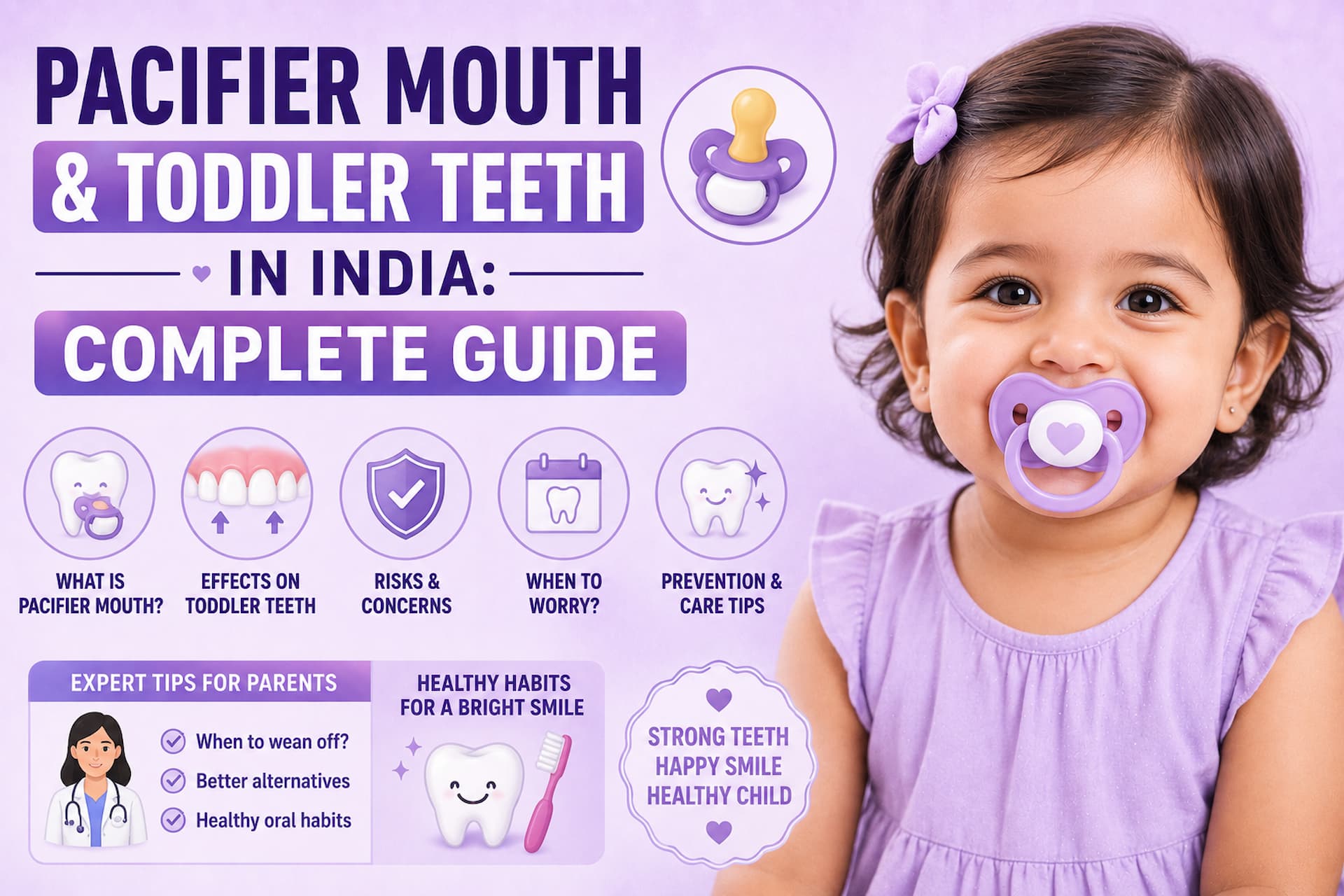
Pacifiers can be incredibly helpful for soothing babies, improving sleep routines, and comforting fussy infants. However, many parents worry about pacifier mouth, changes in pacifier teeth in toddlers, and the long-term effects of prolonged pacifier use. Questions such as “At what age does a pacifier affect teeth?” are among the most common concerns pediatric dentists hear from parents.
The good news is that pacifiers can be used safely when introduced and discontinued at the right time. Understanding the relationship between pacifiers and dental development can help parents make informed decisions for their child’s oral health.
What Is Pacifier Mouth?
“Pacifier mouth” refers to dental changes that may occur when a child uses a pacifier for an extended period, particularly beyond the toddler years.
These changes can include:
- Protruding front teeth
- Misaligned bite
- Open bite (upper and lower front teeth do not meet)
- Narrowing of the upper jaw
- Changes in normal tooth eruption patterns
Not every child who uses a pacifier develops these problems. The risk depends on frequency, duration, and intensity of use.
How Do Pacifiers Affect Toddler Teeth?
During infancy, the mouth and jaw are still developing. Continuous pressure from a pacifier can influence the position of growing teeth and jaw structures.
Common signs of pacifier teeth in toddlers include:
Open Bite
An open bite occurs when the front teeth fail to touch when the mouth is closed.
Overjet
The upper front teeth may protrude forward more than normal.
Crossbite
The upper and lower teeth may not align properly when biting.
Jaw Development Changes
Long-term pacifier habits may affect the natural growth of the upper jaw.
At What Age Does a Pacifier Affect Teeth?
This is one of the most frequently searched questions by parents.
Most pediatric dentists agree that occasional pacifier use during infancy generally does not cause permanent dental issues.
However, prolonged use beyond:
- Age 2 may begin affecting dental development.
- Age 3 significantly increases the risk of bite problems.
- Age 4 and beyond may result in more noticeable orthodontic issues.
The earlier the habit is discontinued, the greater the chance that developing teeth will self-correct naturally.
Is a Pacifier Better Than Thumb Sucking?
In many cases, yes.
Pacifiers are often considered easier to control because parents can gradually limit and remove them. Thumb sucking habits can be more difficult to stop since a child always has access to their thumb.
Many pediatric dentists prefer temporary pacifier use over prolonged thumb sucking.
Can Pacifier Mouth Correct Itself?
In many children, mild dental changes improve naturally after pacifier use stops.
If the habit is discontinued before permanent teeth begin erupting, the mouth often has an opportunity to develop normally.
However, severe bite problems may eventually require orthodontic treatment if the habit continues for several years.
Tips for Preventing Pacifier Teeth Problems
Limit Long-Term Use
Begin reducing pacifier dependency around age 1 and aim to stop by age 2–3.
Use Orthodontic Pacifiers
Orthodontic pacifiers are designed to reduce pressure on developing teeth and jaws.
Avoid Sweetening the Pacifier
Never dip pacifiers in sugar, honey, or sweet liquids, as this increases cavity risk.
Encourage Alternative Comfort Methods
Introduce comfort toys, bedtime routines, and soothing techniques that reduce dependence on pacifiers.
Schedule Regular Dental Visits
Early dental examinations help identify developmental concerns before they become serious.
What About Pacifier Mouth Guards?
Some parents search for pacifier mouth guards, but there is often confusion around the term.
Most commonly, parents are referring to:
- Orthodontic pacifiers
- Protective mouth appliances
- Specialized pacifier designs
While these products may reduce pressure on developing teeth, they cannot completely eliminate the effects of prolonged pacifier use.
Duration of use remains the most important factor.
When Should Parents Consult a Dentist?
Consider a dental evaluation if:
- Your child is older than 2 and heavily dependent on a pacifier.
- Front teeth appear misaligned.
- There is difficulty chewing or speaking.
- The bite appears abnormal.
- Pacifier use continues beyond age 3.
Early intervention can often prevent more significant orthodontic issues later.
Final Thoughts
Pacifiers can be a useful parenting tool during infancy, but long-term use can contribute to pacifier mouth and affect toddler teeth development. Most dental professionals recommend gradually reducing pacifier use by age 2 and discontinuing it by age 3 whenever possible.
By monitoring your child’s oral development and scheduling regular dental checkups, you can enjoy the benefits of pacifiers while minimizing the risk of future dental problems.
FAQs
What is pacifier mouth?
Pacifier mouth refers to changes in tooth alignment and jaw development caused by prolonged pacifier use.
At what age does a pacifier affect teeth?
Dental changes can begin appearing around age 2, with the risk increasing significantly after age 3.
Can pacifier teeth correct themselves?
Yes. Mild changes often improve naturally if pacifier use is stopped early enough.
Are orthodontic pacifiers better for teeth?
Orthodontic pacifiers are designed to reduce pressure on developing teeth, but prolonged use can still affect dental development.
Is thumb sucking worse than a pacifier?
In many cases, thumb sucking can be more difficult to stop than pacifier use, making pacifiers easier for parents to manage and phase out.