
Comprehensive dental treatment planning brings together your medical history, a whole-mouth examination, appropriate diagnostic records, and your personal goals. The result should be a clear explanation of your oral health and an agreed sequence of care, including the options, estimated fees, and follow-up involved.
Throughout my years practising dentistry in the United States, this has been central to how I care for patients. I bring the same approach to American Dental Implants & Smile Clinic in Financial District, Nanakramguda, Hyderabad.
I want patients in India to feel confident expecting this depth of assessment and explanation. Whether you need one restoration or more extensive treatment, you should understand what is recommended and why.
Understanding your health and your priorities
We begin with your concerns: pain, bleeding gums, worn or missing teeth, difficulty chewing, appearance, or anxiety about dental care. Your expectations and previous experiences help shape the discussion.
We review your medical and dental history, medications, allergies, and previous treatment. Conditions and medicines can influence treatment decisions, so bring an up-to-date medication list and any existing dental records. Relevant health changes should also be discussed at later visits.
Examining the whole mouth
A comprehensive examination considers your teeth, existing restorations, gums, supporting tissues, bite, tooth wear, and the soft tissues of your mouth. Gum assessment may include measurements around the teeth to check for periodontal disease.
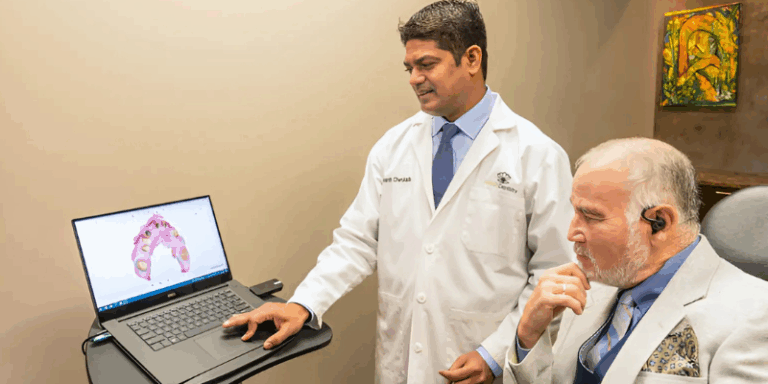
We consider how findings relate to one another. Photographs or digital scans may help explain a concern or plan a restoration. The findings guide which additional records, if any, are needed.
Full mouth X rays and panoramic imaging
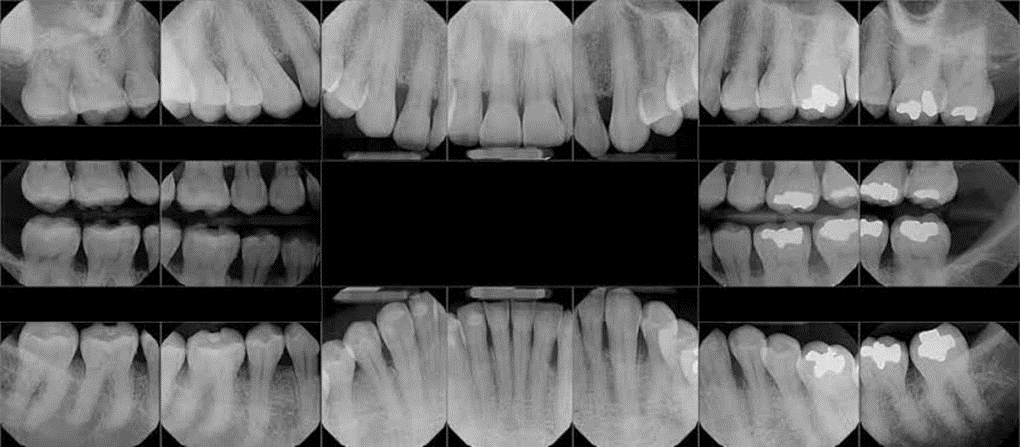
Full-mouth intraoral X-rays arranged in an FMX mount. Imaging is selected according to each patient’s clinical needs.
A full-mouth series consists of individual intraoral X-rays, usually including periapical and bitewing views. When indicated, these provide detail about teeth, roots, decay between teeth, and supporting bone.
A panoramic X-ray, also called an OPG, provides a broader overview of the teeth and jaws. It can help assess tooth positions, impacted teeth, and certain jaw abnormalities. It provides different information from detailed intraoral views.
We follow American Dental Association guidance on selecting imaging after reviewing the history, examination findings, and existing images. A full-mouth series, a panoramic image, or both may be justified for particular needs; neither is automatically required for every patient. A 3D CBCT scan may be indicated for implant planning or another specific clinical question.
We explain which images are recommended and how they will help answer the questions relevant to your care.
What your written treatment plan should explain
After reviewing the findings, I explain the diagnosis in language you can understand and show relevant records. Your plan should identify the teeth or areas involved, what needs attention first, and what can be monitored.
It should explain reasonable treatment options, expected benefits, material risks, and the likely consequences of delaying or declining care. You should have time to ask questions and make an informed choice. Consent is a conversation throughout care, as well as any documentation required.
The written plan should set out the proposed sequence, estimated fees, likely appointment and healing periods, and maintenance needs. Complex cases may require further records, a separate planning discussion, or specialist input. A comprehensive plan may include prevention and monitoring; it does not mean every finding needs immediate treatment.
What happens during your first dental visit
Your first visit establishes the starting point: your history, examination, necessary records, and an explanation of the findings. Bring your medication list, previous X-rays, and questions.
If you arrive with pain or another urgent problem, that assessment may take priority. A more detailed plan can follow once the immediate need has been addressed.
How subsequent visits follow the plan
Care is organised into stages suited to your condition. This may involve urgent treatment, controlling gum disease or decay, restoring damaged teeth, and replacing missing teeth where appropriate.
At each visit, we explain the procedure and confirm your agreement. If new findings affect the proposed treatment or estimated cost, the changes should be discussed and agreed before proceeding. Afterwards, you should know what to expect during recovery, how to care for the area, and when to contact the clinic.
How the plan guides dental implant decisions
For patients considering dental implants in Hyderabad, planning begins with the whole mouth. We assess whether natural teeth can reasonably be preserved, whether gum treatment is needed, and how a replacement tooth would work with the bite.
The proposed replacement tooth helps guide implant planning. Appropriate imaging informs the assessment of the site and relevant anatomy. Your plan should explain whether additional procedures may be needed, the expected stages, provisional and final restorations, and ongoing maintenance.
Frequently asked questions
Does comprehensive planning mean I need extensive treatment?
No. The assessment establishes what is present and which options are reasonable. Some findings may need treatment, while others may be managed through prevention or monitoring.
Do I need both a full mouth series and a panoramic X ray?
Not automatically. Imaging is selected according to your history, clinical findings, existing records, and the diagnostic information needed. We explain why a particular examination is recommended.
Can a treatment plan change?
Yes. New findings, healing, or your preferences can affect the plan. Any proposed changes to treatment, timing, or estimated fees should be explained and discussed with you.
How often will I need follow up visits?
The interval depends on your oral health, disease risk, treatment, and healing. Your maintenance plan should explain both professional reviews and the home care needed between visits.
A considered plan with clear next steps
To me, premium care includes time to understand your condition, a considered plan, and clear communication at every stage. My aim is for you to leave knowing the priorities and the next steps.
Arrange a comprehensive dental consultation with Dr. Srikanth Cherukadu, DMD, at American Dental Implants & Smile Clinic, Financial District, Nanakramguda, Hyderabad. Call +91 92475 34561 or +91 8009007911.
ADA clinical references
1. American Dental Association. Medical and Dental Health History.
2. American Dental Association MouthHealthy. Common Questions About Going to the Dentist.