
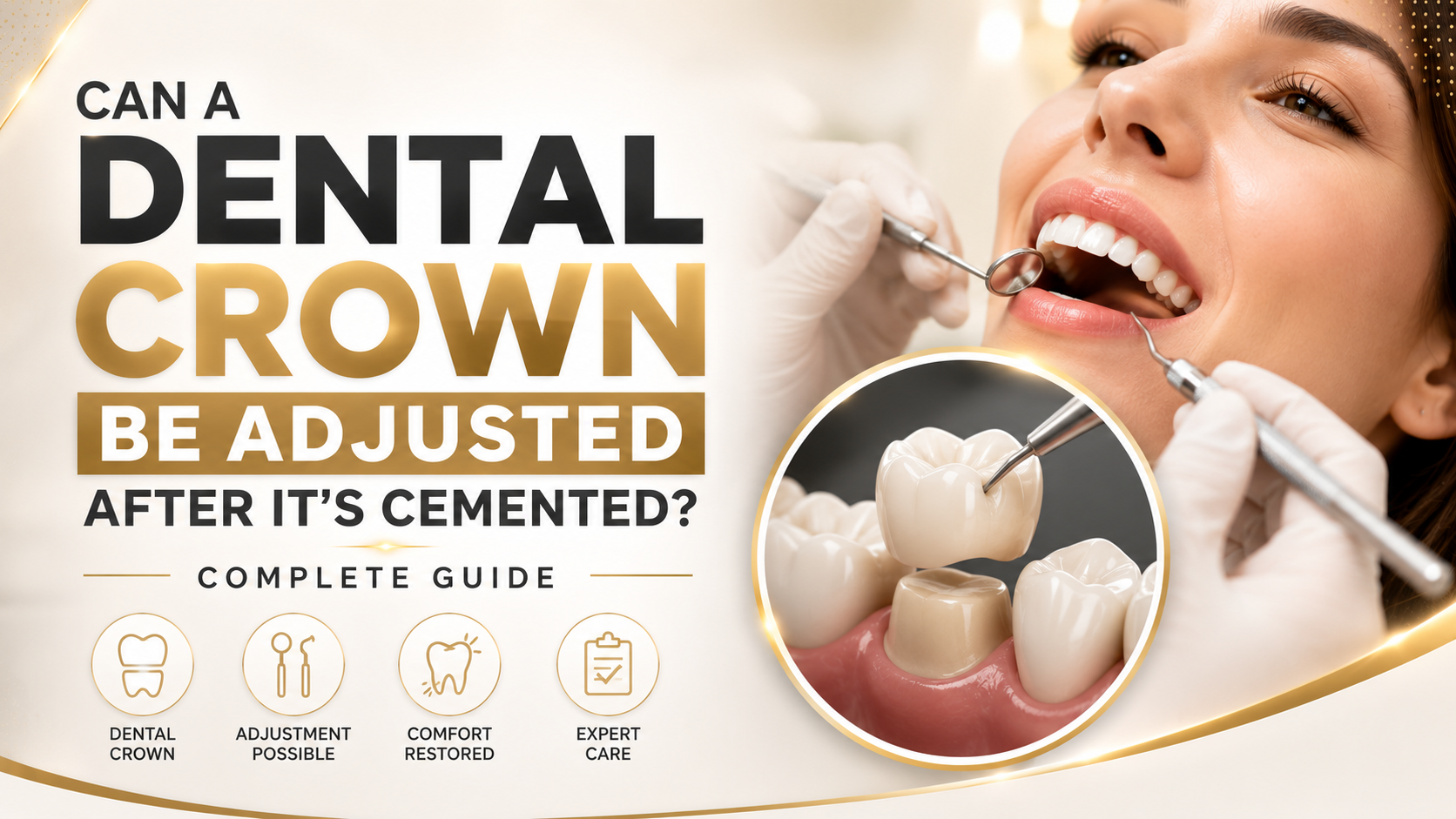
A dental crown is designed to restore the strength, function, and appearance of a damaged tooth. While crowns are carefully crafted to fit your bite and tooth structure, some patients notice discomfort or bite issues after placement and often ask, “Can a crown be adjusted after cemented?”
The simple answer is yes. In most cases, a dental crown can be adjusted even after it has been permanently cemented. Dentists frequently make minor modifications to improve comfort, bite alignment, and overall function.
Why Might a Crown Need Adjustment?
Although modern crowns are created using advanced technology and precise measurements, small variations can occur when the crown is placed in the mouth.
Common reasons a crown may require adjustment include:
- The crown feels too high when biting
- Tooth sensitivity after placement
- Discomfort while chewing
- Jaw pain or muscle tension
- Food getting trapped around the crown
- Bite feels uneven
These issues are relatively common and can often be corrected quickly.
Can a Crown Be Adjusted After It Is Permanently Cemented?
Yes. Once a crown is cemented, dentists can still reshape or polish certain areas to improve its fit.
Minor adjustments may include:
Bite Adjustment
The most common crown modification involves reducing high spots that interfere with your natural bite.
If the crown contacts opposing teeth too early, it can cause:
- Tooth pain
- Jaw discomfort
- Difficulty chewing
Your dentist can carefully adjust the crown’s surface and restore proper bite balance.
Smoothing Rough Areas
Occasionally, a patient may feel sharp or rough edges around the crown. These areas can usually be polished for improved comfort.
Contact Point Adjustments
If food becomes trapped between teeth after crown placement, your dentist may evaluate the contact points and determine whether adjustments are possible.
How Does a Dentist Adjust a Cemented Crown?
The process is typically simple and painless.
Your dentist may:
- Check your bite using articulating paper.
- Identify high pressure points.
- Gently reshape specific areas of the crown.
- Polish the adjusted surface.
- Recheck your bite until it feels comfortable.
Most adjustments can be completed during a short office visit.
How Long Should You Wait Before Requesting an Adjustment?
It’s normal for a new crown to feel slightly different during the first few days.
However, you should contact your dentist if:
- The bite still feels uneven after a few days
- Chewing causes discomfort
- You experience jaw pain
- The crown feels unusually high
- Sensitivity continues to worsen
Early adjustments can prevent long-term problems.
What Cannot Be Fixed with a Simple Adjustment?
While many issues can be corrected through minor modifications, some situations may require crown replacement.
Examples include:
Poor Crown Fit
If the crown does not properly fit the tooth, simple reshaping may not solve the problem.
Major Bite Problems
Significant alignment issues may require remaking the crown.
Cosmetic Concerns
If the crown’s color, shape, or appearance is unsatisfactory, replacement may be the best option.
Structural Damage
Cracked or damaged crowns often need replacement rather than adjustment.
Is Crown Adjustment Painful?
In most cases, crown adjustment is painless.
The dentist adjusts the crown surface rather than the tooth itself. Most patients experience immediate relief once the bite is corrected.
If sensitivity is present, your dentist may recommend additional treatments to improve comfort.
Can an Improperly Adjusted Crown Cause Problems?
Yes. A crown that remains too high can lead to:
- Tooth pain
- Jaw soreness
- Headaches
- Tooth fractures
- Excessive wear on opposing teeth
- TMJ discomfort
That’s why it’s important not to ignore symptoms after crown placement.
How Long Does a Properly Fitted Crown Last?
A well-made and properly adjusted dental crown can last 10 to 15 years or longer with good oral hygiene and regular dental checkups.
Factors affecting crown longevity include:
- Oral hygiene habits
- Teeth grinding
- Diet
- Crown material
- Regular dental maintenance
Final Thoughts
If you’re wondering “Can a crown be adjusted after cemented?”, the answer is yes. Minor bite corrections, polishing, and comfort adjustments are common procedures that dentists perform regularly. Most issues can be resolved quickly without removing the crown.
If your crown feels uncomfortable, don’t wait for the problem to worsen. A simple adjustment may be all that’s needed to restore comfort and ensure long-term success. Visiting an experienced dentist in Hyderabad can help identify the cause of the discomfort, make the necessary adjustments, and ensure your dental crown fits comfortably while protecting your tooth for years to come.
FAQs
Can a crown be adjusted after it has been permanently cemented?
Yes. Dentists can make minor bite and surface adjustments even after a crown has been permanently cemented.
How do I know if my crown is too high?
Common signs include discomfort while chewing, uneven bite pressure, jaw soreness, and the feeling that one tooth touches first when biting down.
How long does a crown adjustment take?
Most crown adjustments can be completed in 10–20 minutes during a routine dental visit.
Can a crown be removed and adjusted?
In some situations, a crown may need to be removed and replaced if the problem cannot be corrected through minor modifications.
Is it normal for a new crown to feel different?
Yes. A new crown may feel slightly unusual for a few days, but persistent discomfort or bite problems should be evaluated by your dentist.
See Our More Dental Treatments :
Dental Bridges and Crowns in Hyderabad