
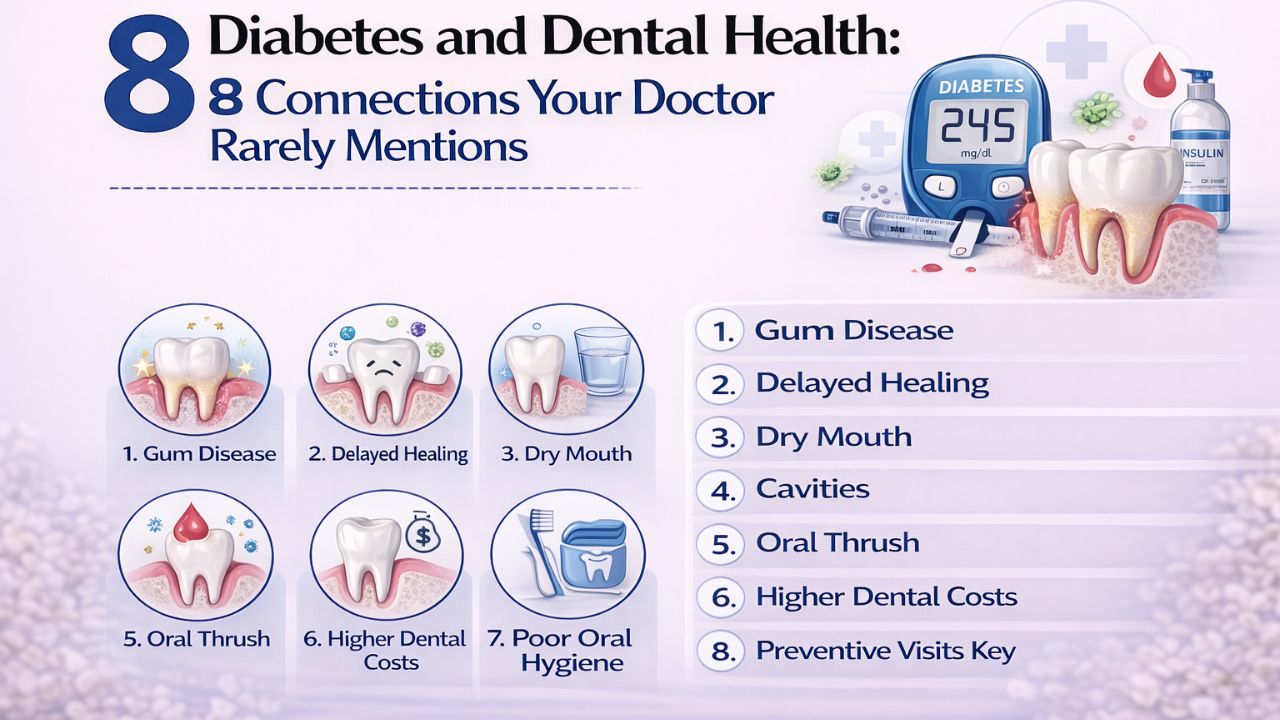
Most people understand that diabetes affects blood sugar levels, but far fewer realize how closely it is linked to oral health. The relationship between diabetes and dental health is not one-sided—it works both ways. Poor oral health can worsen diabetes, and uncontrolled diabetes can accelerate dental problems.
At our American Smile Clinic, we often see patients where dental symptoms are closely connected to systemic health conditions like diabetes. By Dr. Srikanth’s approach, dental care is not treated in isolation—it is part of overall health management. Here are eight important connections that are rarely discussed but can significantly impact your health.
1. Gum Disease Is More Common in Diabetic Patients
People with diabetes are more prone to gum infections due to reduced immunity and higher blood sugar levels.
This can lead to:
- Swollen or bleeding gums
- Persistent bad breath
- Increased risk of periodontal disease
Uncontrolled diabetes makes it harder for the body to fight bacterial infections in the gums.
2. Gum Disease Can Worsen Blood Sugar Control
This is where the relationship becomes two-way.
Severe gum infection can:
- Increase inflammation in the body
- Make blood sugar harder to control
- Complicate diabetes management
At our clinic, managing gum health is often a key part of improving overall diabetic control.
3. Delayed Healing After Dental Procedures
Patients with diabetes often experience slower healing after treatments.
This affects:
- Tooth extractions
- Implant placement
- Gum procedures
By Dr. Srikanth’s experience, proper planning and controlled sugar levels significantly improve healing outcomes.
4. Higher Risk of Tooth Loss
Advanced gum disease combined with poor healing can increase the risk of losing teeth.
Contributing factors include:
- Bone loss around teeth
- Persistent infections
- Weak tissue support
Early intervention can prevent long-term complications.
5. Increased Dry Mouth (Xerostomia)
Many diabetic patients experience reduced saliva flow.
This leads to:
- Dry mouth
- Difficulty chewing or swallowing
- Increased risk of cavities
Saliva plays a key role in protecting teeth, so reduced flow increases vulnerability.
6. Higher Risk of Oral Infections
Diabetes can make patients more susceptible to infections, including:
- Fungal infections like oral thrush
- Bacterial infections in gums
- Recurrent oral sores
At our American Smile Clinic, early detection and management are critical for preventing complications.
7. Burning Mouth Sensation
Some diabetic patients report a burning or tingling sensation in the mouth or tongue.
This can be linked to:
- Nerve-related changes
- Dry mouth
- Nutritional imbalances
While not always severe, it can affect comfort and quality of life.
8. Dental Problems Can Be an Early Warning Sign
In some cases, dental symptoms may appear before diabetes is diagnosed.
Warning signs include:
- Frequent gum infections
- Slow healing
- Persistent oral discomfort
By Dr. Srikanth’s approach, such signs are taken seriously, and patients may be advised to check their blood sugar levels.
How to Protect Your Oral Health If You Have Diabetes
Managing dental health becomes even more important if you have diabetes.
Key steps include:
- Maintain good oral hygiene (brushing and flossing daily)
- Schedule regular dental check-ups
- Keep blood sugar levels under control
- Stay hydrated to reduce dry mouth
- Seek early treatment for any gum issues
At our American Smile Clinic, preventive care is emphasized to avoid complications and maintain long-term oral health.
Final Thoughts
The connection between diabetes and dental health is stronger than most people realize. Ignoring oral health can make diabetes harder to manage, while uncontrolled diabetes can worsen dental problems. The key is to treat both together—not separately.
At our American Smile Clinic, patients receive care that focuses on the bigger picture—combining dental expertise with an understanding of overall health. For patients dealing with tooth loss due to diabetes-related complications, solutions like dental implants in Hyderabad are carefully planned to ensure safety, healing, and long-term success. By Dr. Srikanth’s experience, proactive care and early intervention can make a significant difference in both oral health and diabetes management.
FAQs – Diabetes and Dental Health
Can diabetes cause dental problems?
Yes, it increases the risk of gum disease, infections, and delayed healing.
Does treating gum disease help control diabetes?
Yes, improving gum health can support better blood sugar control.
Are dental treatments safe for diabetic patients?
Yes, with proper planning and controlled blood sugar levels.
How often should diabetic patients visit the dentist?
Typically every 3–6 months, depending on condition.
What is the most common dental issue in diabetes?
Gum disease is the most common and serious concern.