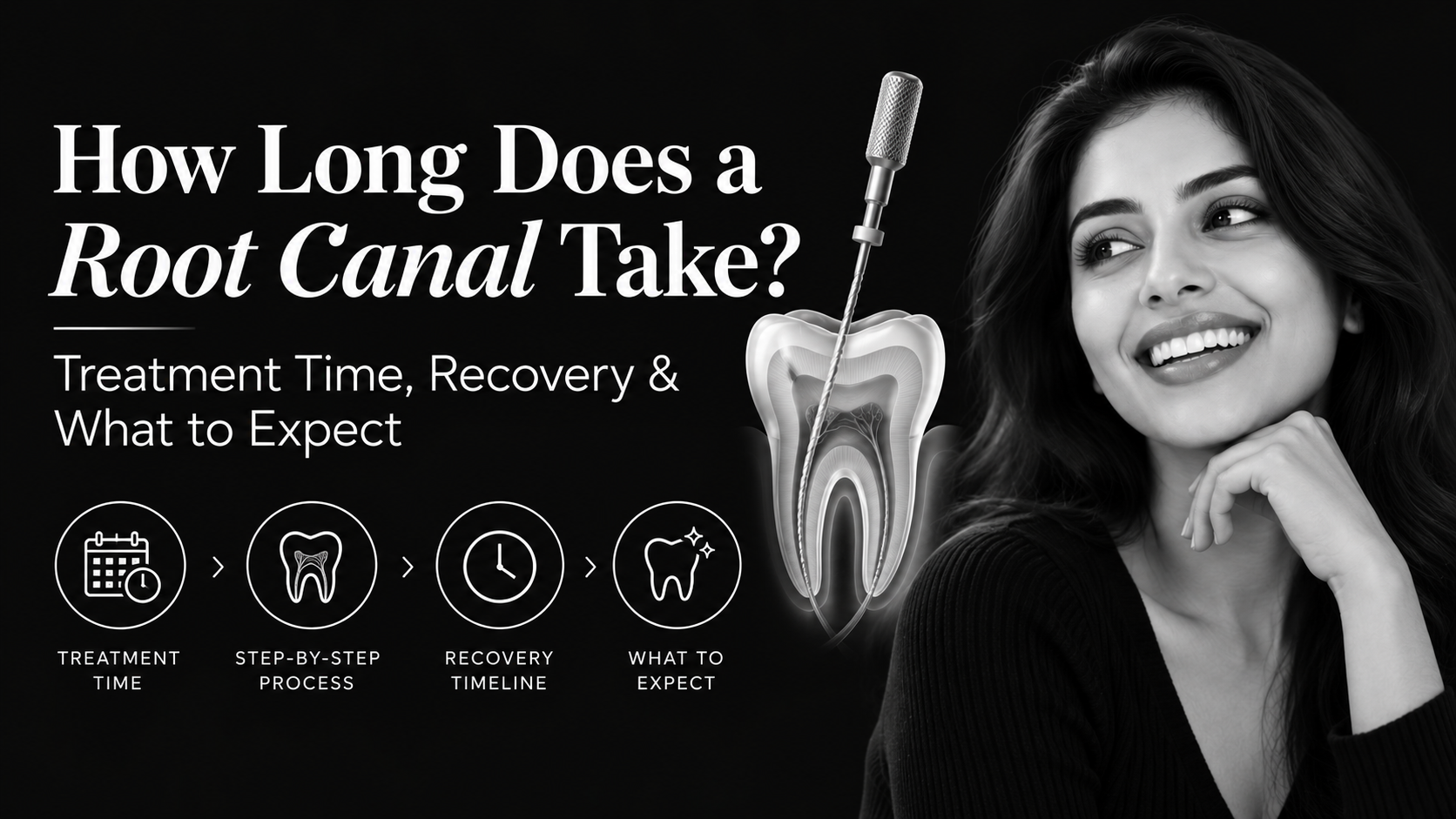
If you have been advised to get a root canal, one of the first questions you may have is: how long does a root canal take?
The answer depends on the tooth being treated, the extent of infection, the number of canals, and whether the tooth needs additional restoration afterward. Some root canal treatments can be completed in a single appointment, while others may require two or more visits.
At American Smile Clinic, root canal treatment is designed around preserving the natural tooth while addressing infection and restoring comfortable function. The clinic provides advanced dental care in Hyderabad under the guidance of Dr. Srikanth Cherukadu, DMD, a Boston University-trained dentist with more than 15 years of American dental experience.
How Long Does a Root Canal Take?
A straightforward root canal can often take around 60–90 minutes, although complex cases may require additional time or multiple appointments.
| Stage | Approximate time |
| Consultation & diagnosis | 20–40 minutes |
| Anesthesia & preparation | 10–20 minutes |
| Cleaning and shaping canals | 30–60+ minutes |
| Filling and sealing | 20–40 minutes |
| Final restoration/crown | Separate appointment if required |
| Overall treatment | One to several appointments |
The actual timeline is determined after examining the tooth and assessing the infection.
What Is a Root Canal?
A root canal is a treatment used when the soft tissue, or pulp, inside a tooth becomes infected or severely inflamed.
Deep decay, cracks, trauma, repeated dental procedures, or untreated infection can allow bacteria to reach the pulp. If the infection progresses, it can cause persistent toothache, sensitivity, swelling, or an abscess.
During treatment, the infected pulp is removed, the internal canals are cleaned and shaped, and the space is sealed. The objective is to save the natural tooth rather than remove it.
American Smile Clinic describes root canal treatment as a procedure that removes infected pulp from inside the tooth and helps save it from extraction.
What Happens During a Root Canal?
Understanding the individual stages can make the treatment feel much more predictable.
1. Consultation and Diagnosis
The dentist first examines the tooth and evaluates your symptoms. Depending on the case, dental imaging may be used to understand the tooth’s internal structure and the extent of infection.
This stage helps determine whether a root canal is appropriate and whether additional treatment will be necessary afterward.
2. Local Anesthesia
The area around the affected tooth is numbed before treatment begins.
Modern dental anesthesia allows most patients to undergo root canal treatment comfortably. If you experience significant dental anxiety, discuss your concerns with your dentist before treatment.
For patients who require additional help staying relaxed during dental procedures, American Smile Clinic also offers sedation dentistry.
3. Accessing the Tooth
The dentist creates a small opening in the tooth to reach the infected pulp and root canals.
The goal is to gain precise access while preserving as much healthy tooth structure as possible.
4. Cleaning and Shaping the Canals
The infected pulp and bacteria are removed from inside the canals.
The canals are then carefully cleaned and shaped so they can be properly sealed. This is one of the most important parts of root canal treatment because incomplete cleaning can increase the risk of persistent infection.
5. Filling and Sealing
After the canals have been cleaned and prepared, they are filled with a biocompatible material and sealed.
This helps prevent bacteria from entering the treated space again.
6. Restoring the Tooth
After a root canal, the tooth may require a filling or crown depending on how much natural structure remains.
Back teeth, in particular, often require additional protection because they absorb significant chewing forces. A properly planned restoration helps protect the treated tooth and restore normal function.
Can a Root Canal Be Completed in One Day?
Yes, some root canal treatments can be completed in a single appointment.
However, one-visit treatment is not appropriate for every patient.
A single-session root canal may be considered when:
- The infection is relatively straightforward
- The tooth has accessible canals
- There are no significant complications
- The dentist can adequately clean and seal the canals during the appointment
- The tooth is suitable for immediate restoration
More complicated cases may require additional appointments.
The priority should not simply be completing treatment as quickly as possible. The important goal is to properly clean, seal, and restore the tooth.
Why Might a Root Canal Need Multiple Visits?
Several factors can make treatment more involved.
Severe Infection
A tooth with extensive infection may require additional treatment and monitoring before it can be permanently restored.
Complex Canal Anatomy
Some teeth have multiple, curved, narrow, or difficult-to-access canals. These can increase treatment time.
Dental Abscess
If an abscess or significant inflammation is present, the dentist may need to manage the infection before completing the final restoration.
Additional Restoration
Even after the root canal itself is completed, the tooth may need a crown or another restoration in a separate appointment.
This is why asking only, “How long does a root canal take?” may not give you the complete picture. The entire treatment journey can extend beyond the root canal procedure itself.
How Long Does It Take to Recover From a Root Canal?
Most patients can return to their regular routine relatively quickly after root canal treatment.
It is common to experience some tenderness or mild discomfort around the treated tooth, particularly when biting. This usually settles as the surrounding tissues recover.
Your dentist may recommend avoiding heavy chewing on the treated tooth until the permanent restoration has been completed.
Good oral hygiene remains important during recovery. Regular professional cleaning can also help maintain the health of the surrounding teeth and gums. You can learn more about professional teeth cleaning in Hyderabad and how preventive dental care fits into your overall oral-health routine.
Can You Eat After a Root Canal?
In many cases, you can eat after treatment, but you should be cautious while the area is still numb.
Eating while your mouth is numb can result in accidentally biting your cheek, tongue, or lip.
Until the final restoration is placed, it is also sensible to avoid excessively hard or sticky foods on the treated tooth.
Your dentist may provide specific instructions depending on the condition of the tooth and the type of temporary restoration used.
Why Might a Crown Be Needed After a Root Canal?
A root canal removes infected tissue from inside the tooth, but it does not automatically restore the tooth’s structural strength.
If significant tooth structure has been lost through decay or the root canal process, a crown may be recommended to protect the remaining tooth.
This is particularly important for molars and premolars because they experience substantial chewing forces.
The type of restoration depends on the individual tooth, remaining structure, bite, aesthetics, and clinical requirements.
How Much Does a Root Canal Cost in Hyderabad?
Root canal costs can vary depending on the tooth, infection severity, complexity, number of canals, and restoration required.
A current American Smile Clinic pricing guide places root canal treatment in Hyderabad at approximately ₹4,000–₹12,000 per tooth, depending on the specific clinical situation and whether additional restoration such as a crown is required.
For a broader overview of treatment costs, you can refer to the clinic’s latest dental treatment price guide for Hyderabad.
It is important to remember that a quoted root canal price may not always represent the entire treatment cost. Diagnosis, imaging, temporary restoration, crown placement, or other procedures may be separate.
Is a Root Canal Painful?
The purpose of modern root canal treatment is to remove the source of dental infection and preserve the tooth.
With appropriate local anesthesia, the procedure itself is generally designed to be comfortable. Some tenderness afterward is possible, particularly if the tissues surrounding the tooth were already inflamed.
If you are anxious about dental treatment, tell your dentist before the procedure rather than waiting until treatment begins. Anxiety management can be incorporated into the treatment plan.
What Happens If You Delay a Root Canal?
A tooth that needs root canal treatment generally does not become healthier simply because the pain temporarily disappears.
In some cases, symptoms can fluctuate or disappear even though infection remains.
Delaying appropriate treatment may allow infection to spread beyond the tooth and potentially result in:
- Increased pain
- Swelling
- Dental abscess
- Damage to surrounding tissues
- Greater difficulty restoring the tooth
- Possible tooth loss
If the tooth can no longer be predictably saved, extraction may become necessary.
Root Canal vs. Tooth Extraction: Which Is Better?
Whenever a natural tooth can be predictably preserved, maintaining it is generally an important consideration.
A root canal attempts to remove infection while keeping the natural tooth in place.
Extraction removes the tooth completely. If the missing tooth needs to be replaced, additional treatment such as an implant, bridge, or denture may then be required.
For patients who eventually need tooth replacement, dental implants in Hyderabad can be one of the restorative options discussed during treatment planning.
For a single missing tooth, implant treatment may involve the implant itself, an abutment, and a crown. American Smile Clinic’s current guide also discusses factors such as bone quality, implant selection, and restoration when planning a single-tooth implant.
What If the Tooth Cannot Be Saved?
Sometimes a tooth is too damaged or compromised for predictable root canal treatment.
In such cases, extraction may be recommended.
If only one tooth is missing afterward, replacement options can be discussed based on your oral health, bone condition, aesthetics, budget, and long-term goals.
For more extensive tooth loss, treatment planning can involve more comprehensive restorative approaches. The clinic also provides advanced implant and full-mouth rehabilitation options.
Root Canal Treatment in Hyderabad: What Should You Look For?
Choosing a dental clinic for root canal treatment involves more than comparing prices.
Consider:
Experience
Look for a dentist with appropriate clinical experience in restorative and endodontic treatment.
Diagnosis and Treatment Planning
Accurate diagnosis is essential before deciding whether a root canal is necessary.
Technology
Digital imaging and modern dental workflows can support more precise diagnosis and treatment planning.
Restoration Planning
Ask what happens after the root canal. A tooth may require a crown or another restoration to function properly.
Comfort
If you have dental anxiety, discuss available comfort and sedation options before treatment.
Long-Term Approach
The objective should be to preserve oral health and function not simply finish the procedure as quickly as possible.
Aesthetic Considerations After Root Canal Treatment
A tooth that has undergone root canal treatment may eventually require restorative or cosmetic attention depending on its condition.
If the tooth is visible when you smile, the final restoration can become part of the broader aesthetic plan.
For patients interested in improving several aspects of their smile, cosmetic dentistry in Hyderabad can address concerns involving tooth appearance, proportions, color, and overall smile aesthetics.
Similarly, comprehensive smile planning may incorporate Digital Smile Design and smile designing when several aesthetic factors need to be considered together.
The key is to treat the underlying dental health issue first and then plan any cosmetic improvements around a stable, healthy foundation.
Root Canal Treatment for Patients Near Narsingi and West Hyderabad
For patients living around Narsingi, Financial District, Nanakramguda, and nearby areas, location can be an important consideration when planning multiple dental appointments.
American Smile Clinic is located in Financial District, Nanakramguda, and its Narsingi clinic page specifically highlights access for patients in and around Narsingi.
You can explore the clinic’s dental care near Narsingi page when considering treatment options in this part of Hyderabad.
Root Canal Treatment for NRIs and International Patients
For NRIs returning to Hyderabad, treatment planning can be slightly different because appointments may need to fit within a limited travel schedule.
American Smile Clinic’s dental tourism program includes pre-arrival treatment planning, virtual consultations, treatment scheduling, and post-treatment guidance for international and NRI patients.
This can be particularly useful when treatment involves several stages, such as a root canal followed by a permanent crown.
You can learn more about dental tourism in Hyderabad if you are planning treatment during a visit to India.
How to Protect a Root-Canal-Treated Tooth
A root canal does not mean the tooth no longer needs care.
To protect the treated tooth:
- Brush twice daily with fluoride toothpaste
- Clean between your teeth regularly
- Attend routine dental check-ups
- Follow your dentist’s restoration recommendations
- Avoid chewing extremely hard objects
- Complete the recommended crown or restoration on time
- Contact your dentist if pain, swelling, or sensitivity returns
Preventive care is particularly important because a restored tooth still forms part of your overall oral environment.
Frequently Asked Questions
How long does a root canal take?
A straightforward root canal may take approximately 60–90 minutes, while complex cases can require longer appointments or multiple visits.
Can a root canal be done in one day?
Yes. Some suitable cases can be completed in one appointment, but complex infections, difficult canal anatomy, or additional restoration may require multiple visits.
How long does root canal recovery take?
Most patients can return to normal daily activities relatively quickly, although mild tenderness may persist for a short period.
Can I eat immediately after a root canal?
You should generally wait until the numbness has worn off before eating normally. Follow your dentist’s instructions regarding chewing on the treated tooth.
Will I need a crown after a root canal?
Not every tooth requires the same restoration. A crown is often considered when substantial tooth structure has been lost, particularly in back teeth.
Is root canal treatment better than extraction?
When a tooth can be predictably saved, root canal treatment allows you to retain your natural tooth. Extraction removes the tooth and may create a need for replacement.
How much does a root canal cost in Hyderabad?
The cost varies according to the tooth, complexity, infection, and restoration required. At American Smile Clinic, the current published range is approximately ₹4,000–₹12,000 per tooth.
What happens if I delay a root canal?
Untreated infection can progress and may eventually cause an abscess, swelling, increased discomfort, or loss of the tooth.
Can a root canal fail?
Although root canal treatment has a high success rate when appropriately planned and performed, persistent infection or reinfection can occur. The cause needs to be assessed by a dentist.
When should I see a dentist for tooth pain?
Persistent toothache, sensitivity that lingers after hot or cold exposure, pain while biting, swelling, or a recurring dental problem should be evaluated rather than ignored.
Final Takeaway: How Long Does a Root Canal Take?
So, how long does a root canal take?
For a straightforward case, treatment may take around an hour to an hour and a half, while more complicated teeth may require multiple appointments. The treatment itself is only one part of the process the diagnosis, infection control, restoration, and follow-up all contribute to a successful long-term result.
The most important consideration is not simply how quickly the root canal can be completed. It is whether the tooth is properly diagnosed, thoroughly treated, adequately restored, and maintained afterward.
Ready to Discuss Root Canal Treatment in Hyderabad?
If persistent tooth pain, sensitivity, swelling, or a damaged tooth is affecting your daily life, a professional evaluation can help determine whether root canal treatment is appropriate.
American Smile Clinic provides advanced dental care in Financial District, Nanakramguda, Hyderabad, combining digital technology, U.S.-standard clinical protocols, and personalized treatment planning under Dr. Srikanth Cherukadu, DMD.
A consultation can help you understand the condition of your tooth, expected treatment time, restoration requirements, and available alternatives before you begin.