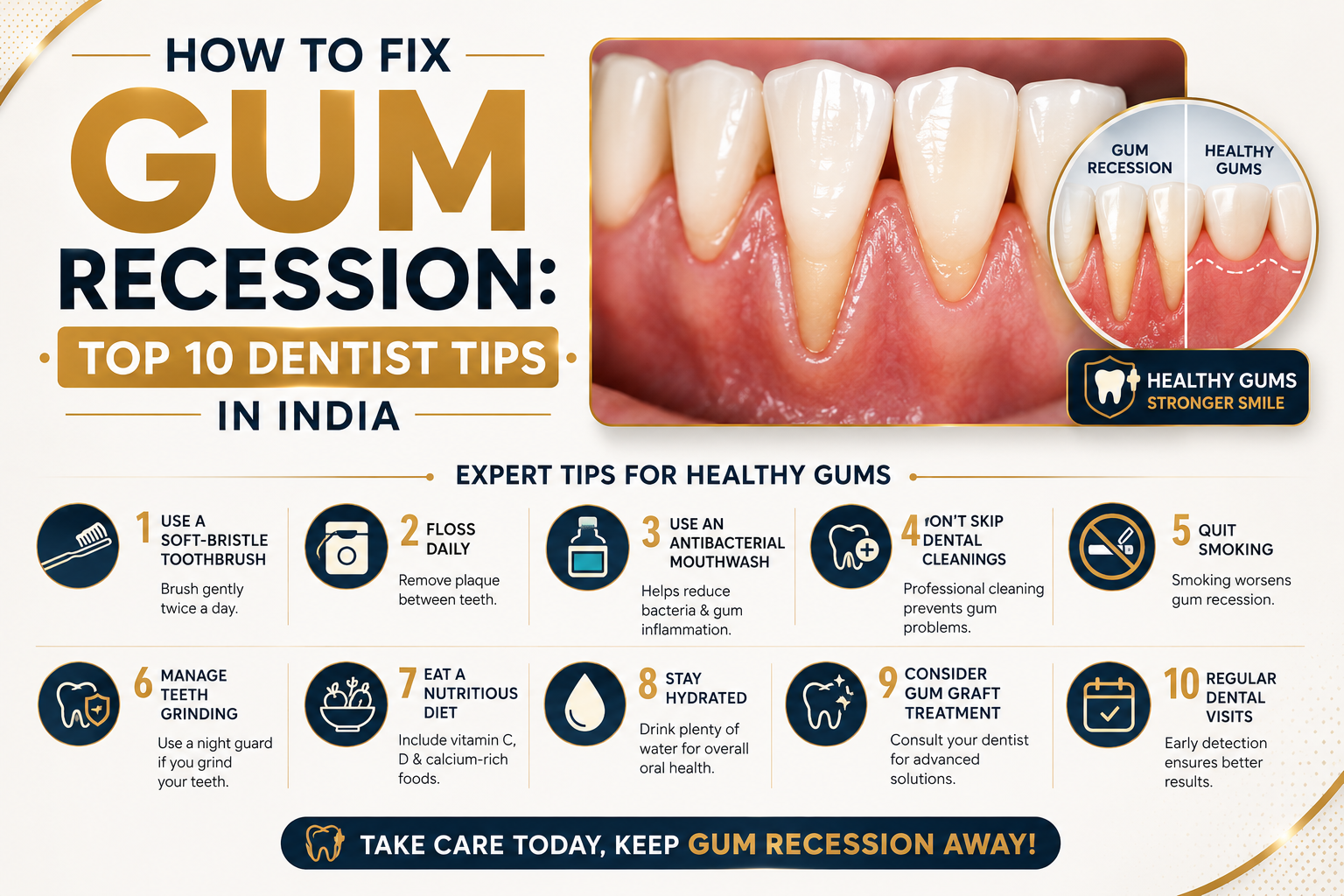
Gum recession occurs when the gum tissue surrounding a tooth moves away from the tooth surface, exposing more of the tooth and sometimes its root. Patients may notice that their teeth appear longer, develop sensitivity to hot or cold foods, or see changes along the gum line. Gum recession can affect one tooth or multiple teeth and may develop gradually without causing significant symptoms in its early stages.
If you are looking for how to fix gum recession, the first step is not choosing a treatment from an online list. A dentist needs to determine why the gums are receding, how much tissue has been lost, whether gum disease is present, and whether the exposed root or supporting bone has been affected. An evaluation by an experienced dentist in Hyderabad can help identify the cause and determine whether preventive care, periodontal treatment, restorative treatment, or gum surgery is appropriate.
Importantly, receded gum tissue generally does not grow back on its own. However, appropriate treatment can address the underlying cause, reduce the risk of further recession, manage sensitivity, and, in selected cases, cover exposed root surfaces.
What Is Gum Recession?
Gum recession, also called gingival recession, occurs when the margin of the gum moves away from its normal position around the tooth.
As the gum recedes, more of the tooth becomes visible. If recession reaches the root, the exposed root surface may become sensitive because it does not have the same protective enamel covering found on the crown of the tooth.
A dentist may assess recession by examining the gum line and measuring the amount of tissue loss around affected teeth. The evaluation may also include checking for gum inflammation, periodontal pockets, plaque and tartar accumulation, tooth position, bite forces, and other contributing factors.
What Causes Receding Gums?
Gum recession does not have a single cause. Several factors can contribute to the condition, and identifying the underlying cause is important when deciding how it should be managed.
Gum Disease
Periodontal disease can damage the tissues and bone that support the teeth. As the disease progresses, the supporting structures around a tooth may be lost, potentially resulting in changes to the gum line and tooth stability.
If periodontal disease is contributing to recession, treating the infection and controlling inflammation is an important part of treatment.
Traumatic or Aggressive Brushing
Brushing is essential for maintaining healthy gums, but excessive pressure or an overly abrasive brushing technique may contribute to wear of the gum margin in susceptible areas.
Using a soft-bristled toothbrush and gentle technique can help reduce unnecessary trauma.
Naturally Thin Gum Tissue
Some people naturally have thinner gum tissue and may be more susceptible to recession. Tooth position, the thickness of the surrounding bone and individual anatomy can influence how the gum responds to mechanical forces.
Misaligned Teeth
Teeth positioned outside the ideal boundaries of the supporting bone may have thinner gum coverage and can be more susceptible to recession.
In selected cases, orthodontic treatment may form part of the overall treatment plan, although moving teeth does not automatically reverse existing gum loss.
Teeth Grinding and Clenching
Bruxism can place excessive forces on teeth and their supporting structures. If grinding or clenching is contributing to a patient’s dental problems, the dentist may evaluate the bite and recommend appropriate measures to manage those forces.
Tobacco Use
Smoking and other forms of tobacco use are strongly associated with periodontal disease and can negatively affect gum health and healing.
Poor Oral Hygiene
Plaque accumulation around the gum line can cause inflammation and contribute to periodontal disease. Maintaining effective oral hygiene is therefore an important part of preventing progression.
How Is Gum Recession Diagnosed?
Before deciding how to treat gum recession, the dentist needs to establish its severity and likely cause.
During an examination, the clinician may assess:
- The depth and extent of gum recession
- Gum thickness and tissue quality
- Plaque and tartar accumulation
- Signs of gingivitis or periodontal disease
- Periodontal pocket measurements
- Tooth mobility
- Tooth position
- Bite and excessive forces
- Root exposure and sensitivity
- Supporting bone levels where clinically indicated
Dental X-rays or other diagnostic records may be recommended when there is a concern about bone loss, periodontal disease, or other underlying dental conditions.
This diagnostic process is important because the treatment for recession caused by periodontal disease may be very different from the management of isolated recession caused by mechanical trauma or tooth position.
How Do Dentists Treat Gum Recession?
There is no single treatment that is appropriate for every patient with receding gums. Treatment depends on the cause, severity, symptoms, progression, gum anatomy, and condition of the supporting tissues.
1. Improving Oral Hygiene and Brushing Technique
If excessive brushing or inadequate plaque control is contributing to the problem, your dentist may recommend changes to your brushing technique and oral hygiene routine.
A soft-bristled toothbrush and gentle pressure can help reduce trauma to vulnerable gum tissue.
However, changing your brushing technique cannot regenerate gum tissue that has already been lost. Its purpose is to help prevent additional damage.
2. Treating Gum Disease
When recession is associated with periodontal disease, controlling the infection is an important priority.
Depending on the severity, periodontal treatment may involve professional cleaning, scaling and root planing, improved home care, and ongoing periodontal maintenance.
Scaling and root planing removes plaque and calculus from tooth surfaces, including areas below the gum line, and can help control periodontal inflammation.
The appropriate treatment depends on the findings of the periodontal examination.
3. Managing Tooth Sensitivity
Exposed root surfaces can become sensitive to cold, heat, sweets, or touch.
A dentist may recommend desensitizing toothpaste, fluoride treatment, changes in oral hygiene technique, or restorative treatment depending on the cause and severity of the sensitivity.
Sensitivity management can make patients more comfortable, but it does not by itself restore lost gum tissue.
4. Addressing Teeth Grinding or Clenching
If bruxism is contributing to excessive forces on the teeth or supporting structures, the dentist may assess the patient’s bite and recommend an appropriate management strategy.
In some cases, a custom oral appliance may be considered. The need for such treatment should be determined following an individual examination rather than simply assuming that grinding is responsible for the recession.
5. Considering Orthodontic Treatment
When tooth position contributes to a patient’s gum condition, orthodontic treatment may sometimes form part of the overall treatment plan.
Braces or clear aligners can reposition teeth in appropriate cases, but orthodontic movement must be planned carefully when gum tissue or supporting bone is limited.
Orthodontics should therefore be considered only after evaluating the periodontal condition and the position of the affected teeth.
6. Restorative Treatment for Exposed Root Surfaces
In selected cases, a dentist may use tooth-colored restorative material to cover an exposed root surface.
This approach can sometimes improve appearance and reduce sensitivity, particularly when the exposed area is suitable for restoration.
However, restorative material does not regenerate lost gum tissue, and the underlying cause of recession still needs to be addressed.
7. Gum Grafting
For certain patients with significant or progressive recession, a periodontal procedure such as gum grafting may be considered.
During gum grafting, tissue is placed over an exposed root area to increase soft-tissue coverage and, where predictable, improve root coverage.
Gum grafting is not necessary for every case of recession. The decision depends on factors such as the amount and progression of recession, gum thickness, root exposure, symptoms, aesthetics, periodontal health, and the patient’s individual anatomy.
A periodontist or appropriately trained dental professional can determine whether surgical treatment is indicated.
Can Receding Gums Grow Back Naturally?
Generally, lost gum tissue does not grow back naturally.
This is an important distinction between stopping recession and reversing existing tissue loss.
Improving brushing technique, treating gum disease, quitting tobacco, and maintaining good oral hygiene can help control the factors contributing to recession. These measures may prevent the condition from becoming worse, but they generally cannot cause previously lost gum tissue to regenerate.
When physical coverage of an exposed root is required, a clinician may consider a gum graft or another appropriate periodontal procedure.
Does Gum Recession Always Require Surgery?
No.
Not every patient with gum recession requires gum graft surgery.
If recession is mild, stable, asymptomatic, and not associated with a significant aesthetic or functional concern, the dentist may recommend monitoring, improved oral hygiene, management of contributing factors, and regular periodontal examinations.
Surgery may become a consideration when there is progressive recession, significant root exposure, persistent sensitivity, inadequate gum tissue, aesthetic concerns, or other clinical indications.
The decision should be based on an examination rather than the depth of recession alone.
Can Laser Treatment Fix Gum Recession?
Laser dentistry can be used for certain periodontal procedures, but it is important to distinguish treating gum infection from regenerating lost gum tissue.
Laser therapy may have a role in selected periodontal treatments, depending on the diagnosis and the clinician’s treatment approach. However, a laser does not automatically cause receded gum tissue to grow back.
If the primary problem is lost gum tissue and root exposure, other periodontal procedures may be more appropriate.
Patients should therefore ask what specific condition is being treated and what outcome the proposed procedure is expected to achieve.
How Can You Prevent Gum Recession From Getting Worse?
Although not every case of recession can be prevented, several measures can help protect your gums.
Brush Gently
Use a soft-bristled toothbrush and avoid aggressive horizontal scrubbing.
Maintain Good Plaque Control
Brush twice a day and clean between your teeth regularly using floss or another interdental cleaning method recommended by your dentist.
Treat Gum Disease Promptly
Persistent gum inflammation, bleeding, swelling, or bad breath should not be ignored.
Avoid Tobacco
Smoking and tobacco use can increase the risk of periodontal problems and interfere with healthy gum tissues.
Manage Teeth Grinding
If you grind or clench your teeth, discuss it with your dentist so the contributing factors can be evaluated.
Attend Regular Dental Examinations
Regular examinations allow your dentist to monitor the gum line and identify changes before they become more advanced.
When Should You See a Dentist for Gum Recession?
Arrange a dental examination if you notice:
- Teeth appearing longer than before
- Visible tooth roots
- New or increasing tooth sensitivity
- Bleeding or swollen gums
- Changes in the gum line
- Food becoming trapped around the gum line
- Tooth mobility
- Persistent bad breath
- Pain or discomfort around the gums
You should seek prompt professional assessment if gum recession is accompanied by loose teeth, significant swelling, pus, severe pain, or other signs of advanced dental or periodontal disease.
Can Gum Recession Cause Tooth Loss?
Gum recession itself does not necessarily mean that a tooth will be lost.
However, recession can sometimes occur alongside periodontal disease, which can damage the bone and other structures supporting the teeth. Advanced untreated periodontal disease can eventually contribute to tooth mobility and tooth loss.
This is why identifying the cause of recession is more important than treating the visible gum line alone.
Gum Recession Treatment in Hyderabad
If you notice receding gums, the appropriate treatment should begin with a clinical examination rather than an assumption about the cause.
At American Smile Clinic, a dentist can evaluate the gum condition, tooth position, periodontal health, sensitivity, and other contributing factors before discussing suitable treatment options.
Depending on the diagnosis, management may involve improving oral hygiene, treating periodontal disease, managing sensitivity, addressing contributing habits, orthodontic treatment, restorative treatment, or referral for periodontal surgery where appropriate.
The objective is not simply to make the gum line look different. It is to identify the reason for the recession, control active disease or contributing factors, protect the tooth, and select treatment that is appropriate for the individual patient.
Final Thoughts
If you are searching for how to fix gum recession, there is no single home remedy or treatment that works for every case.
The first step is identifying the cause. Mild recession may sometimes be managed by controlling contributing factors and monitoring the gums, while periodontal disease may require professional treatment. Persistent sensitivity or exposed roots may require restorative care, and selected cases of significant recession may benefit from gum grafting.
Most importantly, lost gum tissue generally does not regenerate naturally, so early professional evaluation is valuable. A dentist or periodontal specialist can determine whether the recession is stable, whether an underlying disease is present, and which treatment, if any, is appropriate for protecting your teeth and gums.
FAQs About Gum Recession
Can gum recession be reversed?
Receded gum tissue generally does not grow back naturally. Treatment can stop or slow progression and address the underlying cause. In selected cases, periodontal procedures such as gum grafting can provide coverage over exposed root surfaces.
What is the best treatment for receding gums?
There is no single best treatment for every patient. Management may include improving oral hygiene, treating periodontal disease, addressing traumatic brushing, managing sensitivity, restorative treatment, orthodontic treatment, or gum grafting depending on the diagnosis.
Can brushing too hard cause gum recession?
Yes. Excessive brushing pressure or an aggressive technique can contribute to gum damage, particularly in patients with thin or vulnerable gum tissue. A soft-bristled toothbrush and gentle technique are generally recommended.
Do I need gum graft surgery for recession?
Not necessarily. Some cases can be monitored or managed by addressing the underlying cause. Gum grafting may be considered when there is significant or progressive recession, root exposure, persistent sensitivity, inadequate tissue, or an aesthetic concern.
Can gum disease cause gum recession?
Yes. Periodontal disease can damage the tissues and bone supporting the teeth and may be associated with gum recession. If periodontal disease is present, controlling the disease is an important part of treatment.
Can laser treatment grow back receding gums?
Laser treatment may have a role in selected periodontal procedures, but it should not be considered a universal method for regenerating lost gum tissue. The appropriate treatment depends on the cause and severity of the recession.
How can I stop gum recession from getting worse?
Use gentle brushing techniques, maintain effective plaque control, avoid tobacco, address grinding or clenching when present, and attend regular dental examinations. Most importantly, have the cause of the recession professionally evaluated.
Is gum recession a serious dental problem?
It can be, particularly when it is progressive or associated with periodontal disease. Recession may expose sensitive root surfaces and, when combined with periodontal problems, can be associated with loss of supporting tissues. Early evaluation can help prevent avoidable complications.