Receding gums are a common dental problem that affects millions of people worldwide. If you’ve noticed your teeth looking longer than usual, increased sensitivity, or visible tooth roots, you may be experiencing gum recession. Many people search for how to treat receding gums or how to fix receding gums because early treatment can help prevent tooth loss and protect long-term oral health. Consulting an experienced dentist in Hyderabad at the first signs of gum recession can help identify the underlying cause and recommend the most effective treatment plan.
The good news is that modern dentistry offers several effective treatment options for managing and treating receding gums. The best solution depends on the severity of the recession and its underlying cause.
What Are Receding Gums?
Gum recession occurs when the gum tissue surrounding the teeth gradually pulls away, exposing more of the tooth or even the tooth root.
Common symptoms include:
- Teeth appearing longer
- Tooth sensitivity
- Visible tooth roots
- Gaps between teeth and gums
- Bleeding gums
- Bad breath
Without treatment, gum recession can lead to bone loss, loose teeth, and eventual tooth loss.
What Causes Gum Recession?
Several factors can contribute to receding gums:
- Gum disease (periodontitis)
- Aggressive brushing
- Poor oral hygiene
- Teeth grinding
- Tobacco use
- Misaligned teeth
- Genetics
- Hormonal changes
Identifying the cause is the first step in selecting the right treatment.
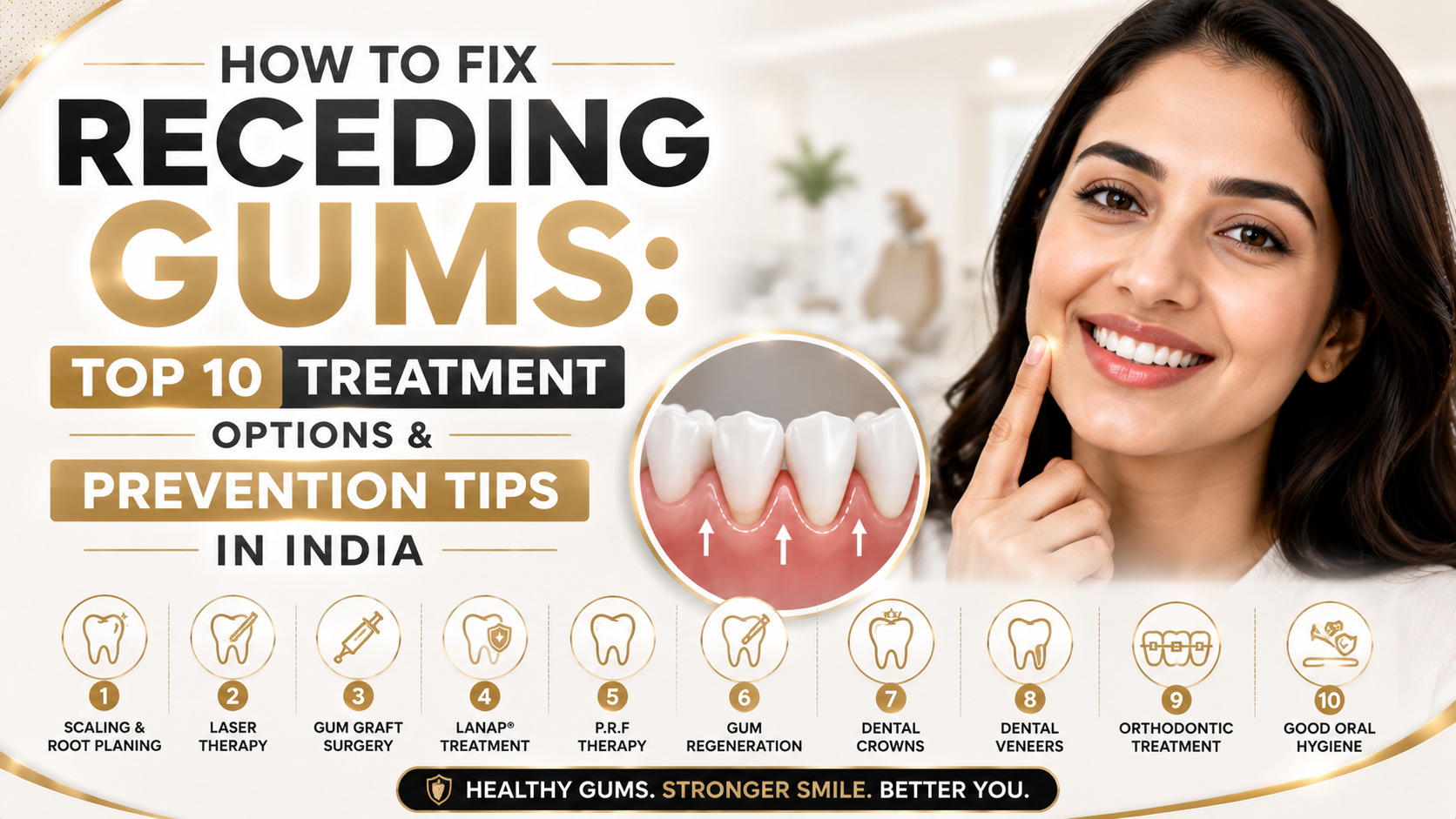
Top 10 Treatments for Receding Gums
1. Professional Dental Cleaning
If gum recession is caused by plaque and tartar buildup, a professional dental cleaning can help remove bacteria and reduce inflammation.
This is often the first step in treatment.
2. Scaling and Root Planing
Also known as deep cleaning, scaling and root planing removes plaque and bacteria from below the gum line.
It helps the gums reattach to the tooth surface and slows disease progression.
3. Improved Oral Hygiene
Good oral hygiene can prevent further recession.
This includes:
- Brushing twice daily
- Flossing regularly
- Using antibacterial mouthwash
- Regular dental checkups
4. Soft-Bristle Toothbrush
Aggressive brushing is a common cause of gum recession.
Switching to a soft-bristle toothbrush and using gentle brushing techniques can prevent further damage.
5. Desensitizing Treatments
When roots become exposed, teeth often become sensitive.
Dentists may recommend:
- Desensitizing toothpaste
- Fluoride treatments
- Protective coatings
These help reduce discomfort.
6. Gum Bonding
For mild recession, tooth-colored composite material can be applied to exposed roots.
This improves appearance and reduces sensitivity.
7. Laser Gum Therapy
Modern laser treatments can help reduce bacterial infection and support gum healing with minimal discomfort.
Laser dentistry is becoming increasingly popular for periodontal treatment.
8. Orthodontic Treatment
Misaligned teeth can place excessive pressure on gums.
Braces or clear aligners may help improve tooth positioning and reduce further recession.
9. Gum Grafting Surgery
For moderate to severe recession, gum grafting remains one of the most effective solutions.
Healthy tissue is placed over exposed roots to:
- Improve appearance
- Reduce sensitivity
- Protect the tooth
10. Pinhole Surgical Technique (PST)
This minimally invasive procedure treats gum recession without traditional grafting in selected cases.
Recovery is often faster compared to conventional gum surgery.
Can Receding Gums Grow Back Naturally?
Unfortunately, gum tissue that has been lost does not usually grow back naturally.
However, early treatment can stop the progression of recession and protect remaining gum tissue.
In more advanced cases, surgical procedures may be needed to restore coverage.
How to Prevent Receding Gums
Prevention is always better than treatment.
Brush Gently
Avoid scrubbing your teeth aggressively.
Floss Daily
Flossing removes plaque that can contribute to gum disease.
Stop Smoking
Smoking significantly increases the risk of gum recession and periodontal disease.
Wear a Night Guard
If you grind your teeth, a custom night guard can protect both teeth and gums.
Visit Your Dentist Regularly
Routine examinations allow early detection and treatment of gum problems.
When Should You See a Dentist?
Schedule a dental evaluation if you notice:
- Exposed tooth roots
- Persistent tooth sensitivity
- Bleeding gums
- Gum tissue pulling away from teeth
- Loose teeth
- Changes in your smile
Early treatment often prevents more extensive procedures later.
Final Thoughts
If you’re searching for how to fix receding gums, the most important step is identifying the cause and seeking treatment early. While lost gum tissue generally does not grow back on its own, modern dentistry offers several effective solutions ranging from deep cleanings and laser therapy to advanced gum grafting procedures.
With proper treatment and good oral hygiene, it is possible to stop gum recession, improve comfort, and protect your smile for years to come.
FAQs
Can receding gums be reversed naturally?
No. Gum tissue typically does not grow back naturally once it has receded, but early treatment can prevent further damage.
What is the best treatment for receding gums?
The best treatment depends on severity. Options range from professional cleanings and deep cleanings to gum graft surgery.
How do dentists fix receding gums?
Dentists may use scaling and root planing, gum bonding, laser therapy, orthodontics, or gum grafting depending on the condition.
Are receding gums serious?
Yes. Untreated gum recession can lead to sensitivity, root damage, bone loss, and eventually tooth loss.
Can brushing too hard cause gum recession?
Yes. Aggressive brushing is one of the most common causes of gum recession and can worsen existing gum problems.
See Our More Dental Treatments :
All On 4 Dental Implants in Hyderabad
Zirconia Dental Implants in Hyderabad