Healthy gums play a crucial role in protecting your teeth and maintaining long-term oral health. However, many people don’t realize they have gum recession until symptoms become noticeable. Understanding the difference between receding gums vs normal gums can help you identify potential problems early and seek treatment before permanent damage occurs.
In this guide, we’ll compare healthy gums and receding gums, discuss common causes, warning signs, treatment options, and prevention tips.
What Are Normal Gums?
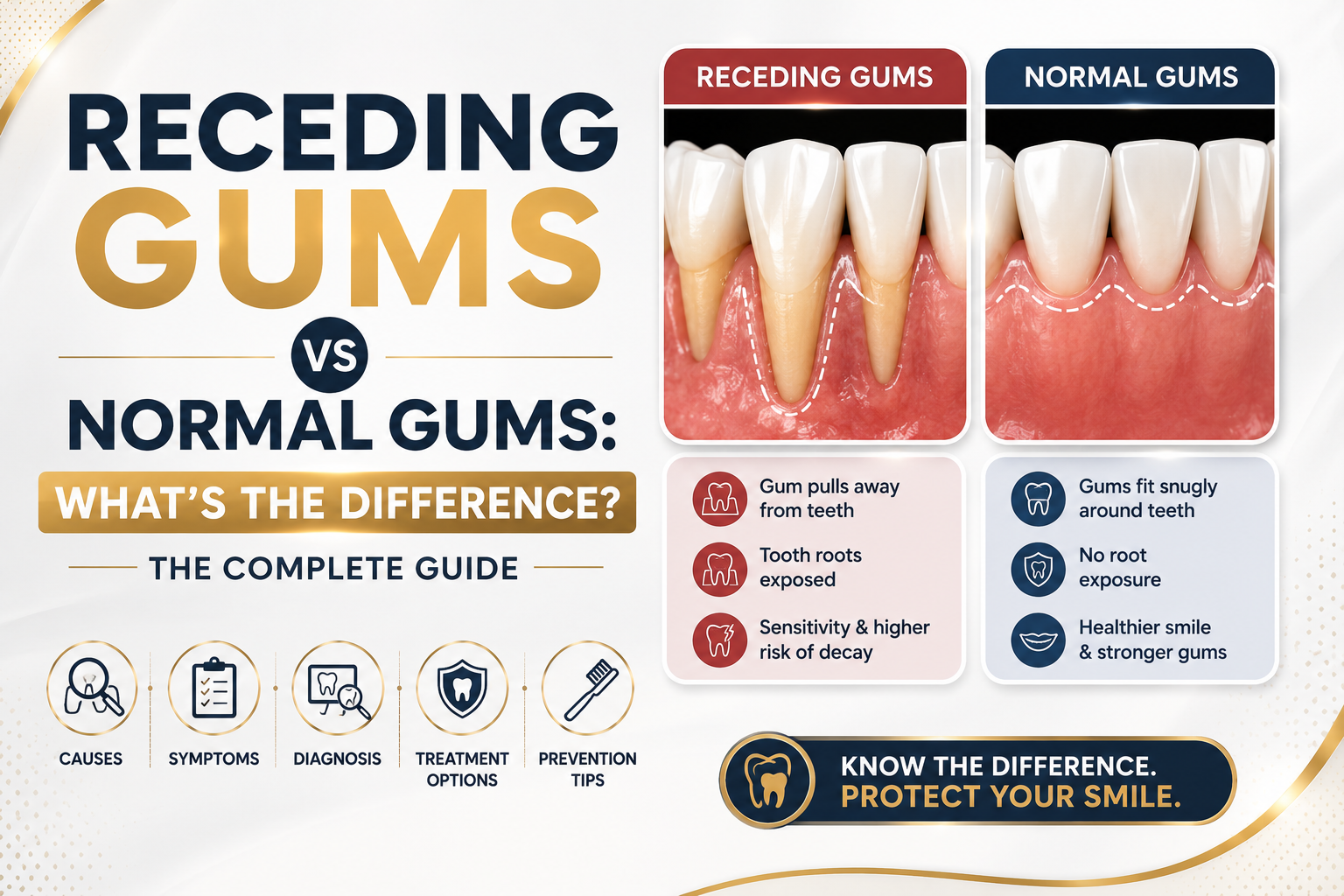
Normal gums fit snugly around the teeth and protect the roots and supporting bone structures.
Healthy gums typically have the following characteristics:
- Light pink or coral pink color
- Firm and resilient texture
- No swelling or redness
- No bleeding during brushing or flossing
- Teeth appear proportionate in size
- Gum line is even and symmetrical
Healthy gums act as a protective barrier against bacteria and help keep teeth securely anchored.
What Are Receding Gums?
Receding gums occur when gum tissue gradually pulls away from the teeth, exposing more of the tooth surface or even the tooth root.
Unlike healthy gums, receding gums no longer provide complete protection for the tooth roots.
As gum recession progresses, teeth may appear longer and become more sensitive to temperature changes.
Receding Gums vs Normal Gums: Key Differences
| Feature | Normal Gums | Receding Gums |
| Gum Position | Covers tooth roots | Roots become exposed |
| Appearance | Even gum line | Uneven or lowered gum line |
| Tooth Length | Normal appearance | Teeth appear longer |
| Sensitivity | Minimal sensitivity | Increased sensitivity |
| Bleeding | Rare | May occur if gum disease is present |
| Gum Health | Firm and healthy | May appear thin or damaged |
| Risk of Tooth Loss | Low | Higher if untreated |
Signs You May Have Receding Gums
Many people don’t notice recession until it becomes advanced.
Common warning signs include:
Teeth Look Longer
One of the earliest indicators is when teeth appear noticeably longer than before.
Increased Sensitivity
Exposed roots can react to:
- Cold drinks
- Hot beverages
- Sweet foods
- Brushing
Visible Root Surfaces
You may notice yellowish or darker areas near the gum line.
Gum Line Changes
The gum line may appear uneven or lower around certain teeth.
Bleeding Gums
If gum disease is contributing to recession, bleeding may occur during brushing or flossing.
What Causes Gum Recession?
Several factors can contribute to receding gums.
Gum Disease
Periodontal disease is one of the leading causes of gum recession worldwide.
Aggressive Brushing
Brushing too hard can wear away gum tissue over time.
Teeth Grinding
Excessive grinding and clenching can place pressure on teeth and gums.
Poor Oral Hygiene
Plaque and tartar buildup increase the risk of gum disease and recession.
Smoking and Tobacco Use
Tobacco products significantly increase the risk of gum problems.
Genetics
Some people are naturally more prone to gum recession due to inherited factors.
Are Receding Gums Dangerous?
Yes, untreated gum recession can lead to serious dental problems.
Potential complications include:
- Root decay
- Severe tooth sensitivity
- Bone loss
- Loose teeth
- Tooth loss
- Gum infections
Early diagnosis significantly improves treatment outcomes.
Can Receding Gums Grow Back?
Unfortunately, lost gum tissue does not naturally regenerate in most cases.
However, treatment can:
- Stop further recession
- Reduce sensitivity
- Protect exposed roots
- Improve appearance
Advanced cases may require surgical intervention.
Treatment Options for Receding Gums
Depending on the severity, treatment may include:
Professional Dental Cleaning
Removes plaque and tartar that contribute to gum inflammation.
Scaling and Root Planing
Deep cleaning below the gum line to treat gum disease.
Gum Bonding
Tooth-colored materials can cover exposed root surfaces.
Laser Gum Therapy
Modern laser treatments can help manage periodontal disease.
Gum Grafting
A common surgical procedure used to restore lost gum tissue coverage.
How to Prevent Gum Recession
Preventive care remains the best strategy.
Use a Soft-Bristle Toothbrush
Gentle brushing protects both teeth and gums.
Practice Good Oral Hygiene
Brush twice daily and floss regularly.
Wear a Night Guard
If you grind your teeth, a custom night guard can reduce pressure on gums.
Avoid Tobacco Products
Smoking significantly increases gum disease risk.
Schedule Regular Dental Visits
Routine checkups allow dentists to identify recession before it becomes severe.
Final Thoughts
Understanding the difference between receding gums vs normal gums is important for maintaining long-term oral health. Healthy gums protect your teeth, while receding gums expose vulnerable root surfaces and increase the risk of sensitivity, decay, and tooth loss.
If you notice your teeth appearing longer, increased sensitivity, or visible gum line changes, don’t ignore the signs. Early diagnosis and treatment at a trusted dental clinic in Hyderabad can help preserve your gums, protect your teeth, and prevent more complex dental problems in the future.
FAQs
How can I tell if my gums are receding?
Common signs include longer-looking teeth, visible roots, increased sensitivity, and an uneven gum line.
Are receding gums reversible?
Lost gum tissue usually does not grow back naturally, but treatment can stop further recession and improve protection.
What do healthy gums look like?
Healthy gums are pink, firm, do not bleed easily, and fit tightly around the teeth.
Can brushing too hard cause gum recession?
Yes. Aggressive brushing is a common cause of gum recession and can damage gum tissue over time.
When should I see a dentist about receding gums?
You should schedule a dental evaluation if you notice sensitivity, exposed roots, bleeding gums, or visible changes in your gum line.
See Our More Dental Treatments :
Cosmetic Dentist in Hyderabad
TMJ Botox Treatment in Hyderabad