
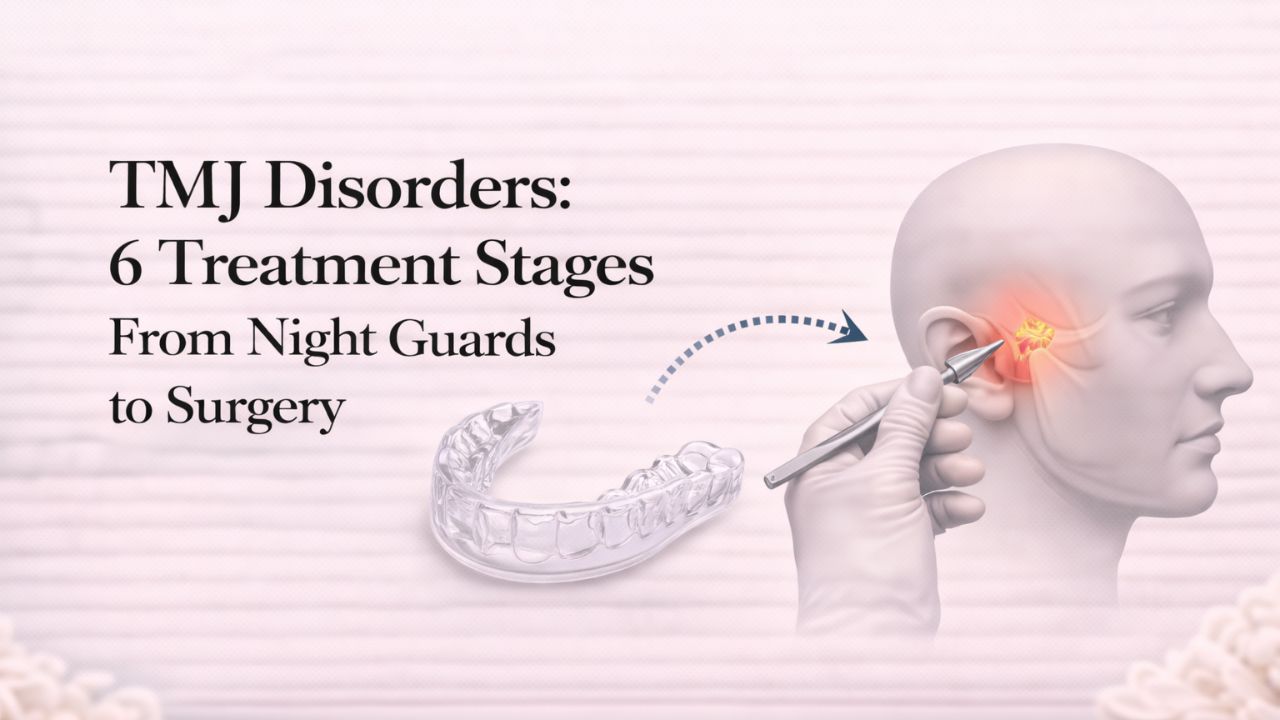
Jaw pain, clicking sounds, headaches, and difficulty in opening the mouth are often signs of TMJ (temporomandibular joint) disorders. While many patients assume surgery is the only solution, the reality is very different. TMJ treatment is usually approached in stages—starting from simple, non-invasive methods and progressing only if required.
At our American Smile Clinic, TMJ disorders are treated with a structured, step-by-step approach focused on identifying the root cause rather than just managing symptoms. By Dr. Srikanth’s experience, most TMJ cases can be successfully managed without surgery when diagnosed early and treated correctly. Here are the six key stages of TMJ treatment.
1. Lifestyle Changes and Self-Care
The first stage focuses on reducing strain on the jaw and allowing the joint to recover naturally.
Patients are advised to:
- Avoid hard or chewy foods
- Limit excessive jaw movements (like wide yawning or gum chewing)
- Apply warm compresses to relax muscles
- Practice stress management techniques
In many mild cases, these simple changes can significantly reduce symptoms.
2. Night Guards (Occlusal Splints)
One of the most common causes of TMJ issues is teeth grinding or clenching, especially during sleep.
Night guards help by:
- Reducing pressure on the jaw joint
- Preventing tooth wear
- Allowing muscles to relax
At our clinic, night guards are custom-designed for precise fit and effectiveness—not generic solutions.
3. Medications and Pain Management
When discomfort is more pronounced, short-term medications may be recommended.
These may include:
- Anti-inflammatory drugs
- Muscle relaxants
- Pain relief medications
This stage helps control inflammation and discomfort while other treatments address the root cause.
4. Physiotherapy and Jaw Exercises
Targeted physiotherapy plays a key role in improving jaw function and reducing stiffness.
This includes:
- Jaw stretching and strengthening exercises
- Posture correction
- Muscle relaxation techniques
By Dr. Srikanth’s approach, improving muscle balance is essential for long-term relief.
5. Botox for TMJ (Non-Surgical Advanced Option)
For patients with severe clenching or muscle-related TMJ pain, Botox can be an effective solution.
It works by:
- Relaxing overactive jaw muscles
- Reducing grinding force
- Relieving tension and pain
At our American Smile Clinic, TMJ Botox is used carefully as part of a comprehensive treatment plan—not as a standalone shortcut.
6. Surgical Intervention (Last Resort)
Surgery is considered only when all other treatments fail or when there is a structural issue in the joint.
This may involve:
- Arthroscopy (minimally invasive joint procedure)
- Joint repair or repositioning
- Advanced corrective surgery
By Dr. Srikanth’s experience, very few patients actually require this stage when earlier treatments are managed properly.
How Treatment Is Decided
TMJ treatment is not one-size-fits-all. The right stage depends on:
- Severity of symptoms
- Underlying cause (muscle vs joint issue)
- Lifestyle and habits
- Duration of the condition
At our American Smile Clinic, detailed diagnosis and step-by-step planning ensure that treatment is progressive, conservative, and effective.
Final Thoughts
TMJ disorders can be uncomfortable and disruptive, but they are highly manageable with the right approach. The key is early diagnosis and starting with the least invasive treatment before considering advanced options.
At our American Smile Clinic, TMJ care focuses on precision, comfort, and long-term relief. By Dr. Srikanth’s approach, every stage is carefully planned to reduce pain, restore function, and improve quality of life—without unnecessary procedures.
FAQs – TMJ Treatment
Can TMJ go away on its own?
Mild cases may improve with self-care, but persistent symptoms require professional evaluation.
Is a night guard enough to treat TMJ?
It helps in many cases, but additional treatments may be needed depending on severity.
Is TMJ Botox safe?
Yes, when performed by experienced professionals, it is a safe and effective option.
When is surgery required for TMJ?
Only in severe cases where conservative treatments do not work.
How long does TMJ treatment take?
It varies—some patients improve in weeks, while others may need longer-term care.